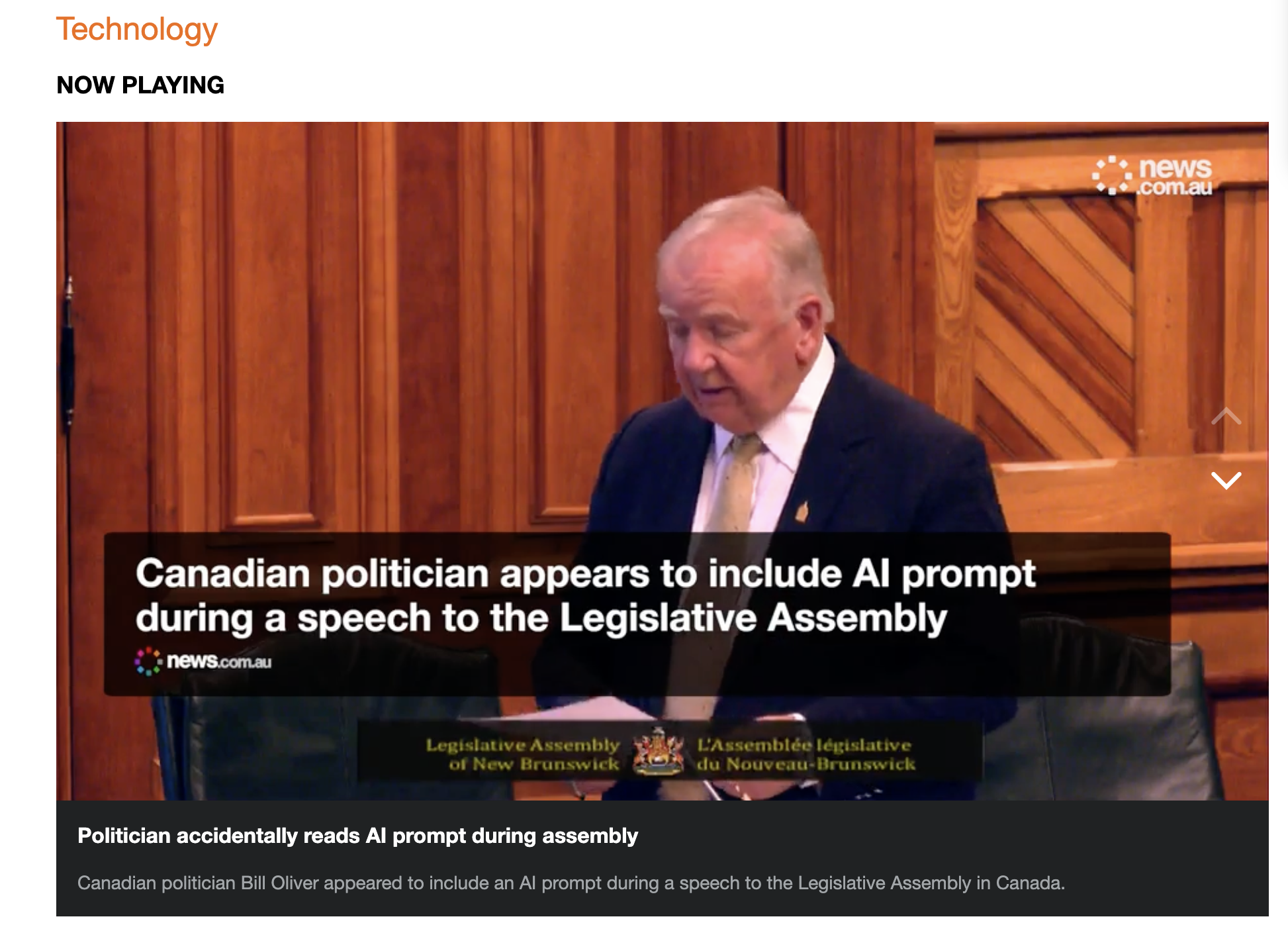
During a debate in the New Brunswick legislature, MLA Bill Oliver read a sentence that was clearly not intended for the chamber:
“Here’s a more natural-flowing version of that section that reads like legislative speech, rather than a series of short points.”
Then he continued into the revised passage.1
The obvious reaction is that someone failed to proofread the speech. That is true, but it stops one step too late.
The deeper failure was in the workflow.
Two stages became one
We cannot know from the clip who used AI or how the speaking notes were prepared. But the leaked instruction suggests a plausible sequence: someone developed the argument as a series of short points, worked back and forth on the substance, and then asked an AI tool to convert those points into a legislative speech.
Those are two different modes of work.
Explore the argument: generate points, challenge assumptions and decide what belongs.
Produce the artifact: turn the approved argument into words intended for delivery.
The AI response contained both a comment about the transformation and the transformed text. The workflow treated the whole response as the deliverable.
That is an artifact-boundary failure: working conversation, editorial instruction and final copy were allowed to occupy the same space.
A better prompt helps. A better structure helps more.
The production prompt could have been explicit:
Using the approved points below, write the final legislative speech. Return only the words to be spoken. Do not include an introduction, explanation, headings, alternatives or editorial notes.
That would reduce the risk, but prompting alone is not the full answer. A resilient workflow would close the exploratory phase, approve the argument, generate the speech into a separate document, and then verify that document before delivery.
The sequence matters:
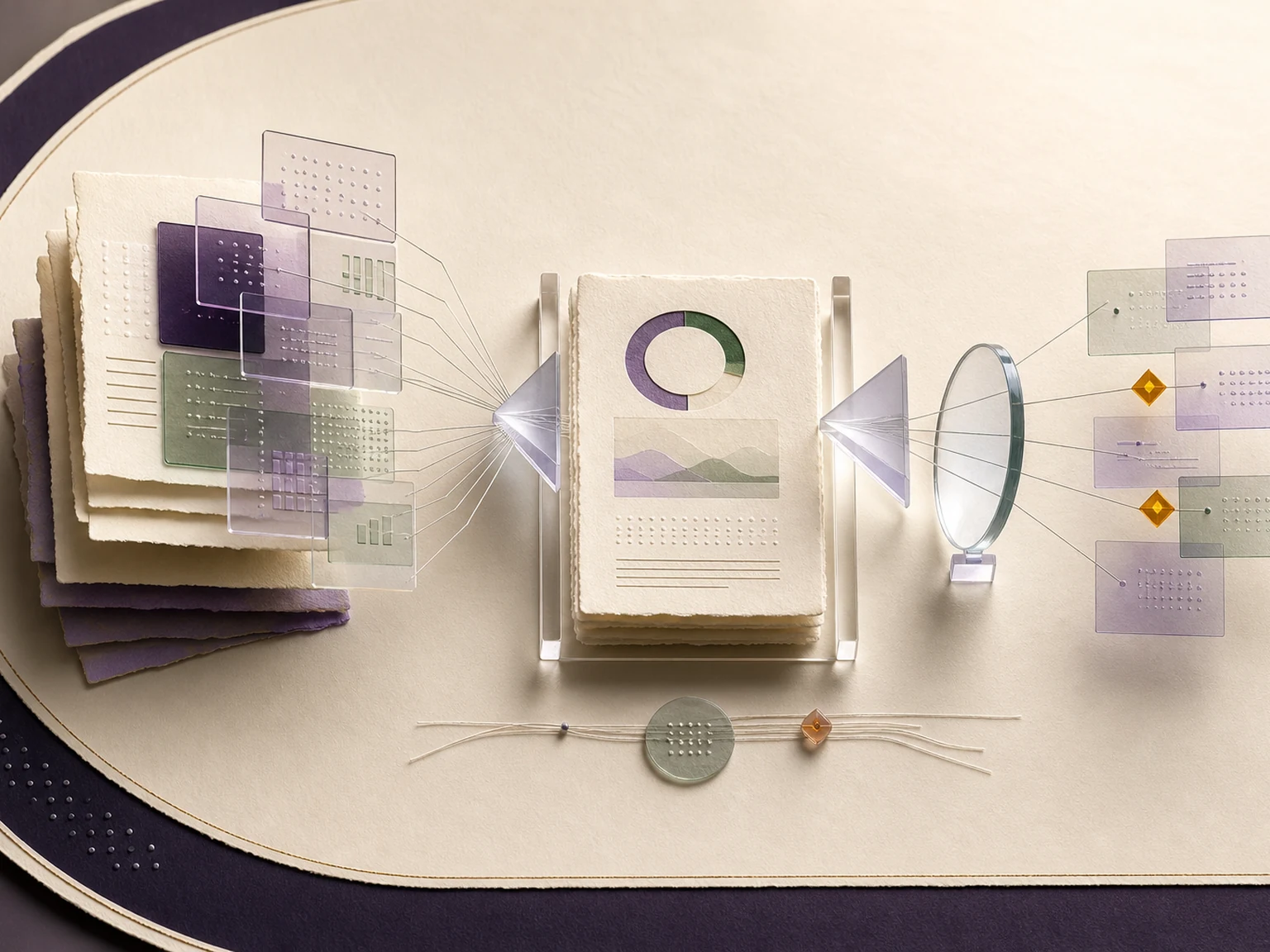
Explore → decide → produce → verify → deliver.
A final review remains necessary. But it should be the last control in a well-separated process, not the only thing preventing a working note from reaching the microphone.